Tree Roots and Foundation Damage: What Homeowners in the New River Valley Need to Know
Worried about a tree near your foundation? Here is what actually causes foundation damage, which trees pose the most risk, and what your options are.

It's one of the most common concerns we hear from homeowners: "I have a big tree close to my house — is it going to damage my foundation?" It's a fair question, and the answer is more nuanced than most people expect.
Tree roots and foundation damage is a topic surrounded by a lot of misinformation. Some homeowners remove perfectly healthy trees out of unfounded fear. Others ignore genuine warning signs until the damage is done. Here's what we've learned from working with New River Valley homeowners — and the structural engineers and foundation specialists we've collaborated with — about the real relationship between tree roots and foundations.
How Tree Roots Actually Cause Foundation Damage
First, it's important to understand that tree roots don't typically punch through solid concrete foundations the way they're often depicted. What actually happens is more subtle — and more dependent on soil conditions than most people realize.
Expansive Clay Soils
Parts of the New River Valley have clay-heavy soil, and where clay is present it can be a significant driver of foundation problems related to trees. Here's why:
Clay soil expands when wet and contracts when dry. Tree roots draw moisture from the soil around them, causing the clay to shrink and contract. This differential settlement — where the soil under part of your foundation dries out and contracts more than the rest — can cause the foundation to crack, shift, or settle unevenly.
This is a slow process, typically playing out over years or decades. But in drought conditions, it can accelerate significantly.
Exploiting Existing Weaknesses
Tree roots do not break through intact, properly constructed foundations. What they do is exploit existing cracks, gaps, or weaknesses — particularly in older foundations, block foundations, or foundations with pre-existing damage. Once a root finds a crack, it can widen it over time as the root grows.
Drain Lines and Sewer Pipes
This is where roots cause the most documented damage. Older clay or cast iron drain lines and sewer pipes develop small cracks or joint separations over time. Tree roots are drawn to the moisture and nutrients inside these pipes and can infiltrate through even tiny openings, eventually blocking or breaking the pipe entirely.
If you have older drain lines and large trees nearby, this is worth monitoring.
Which Trees Pose the Most Risk?
Not all trees are equal when it comes to foundation risk. The key factors are:
Root aggressiveness — some species have more aggressive, wide-spreading root systems than others.
Water demand — trees with high water needs draw more moisture from the soil, increasing the risk of differential settlement in clay soils.
Size — larger trees have larger, more extensive root systems.
Higher-risk species common in the New River Valley:
- Silver maple — fast-growing with aggressive, shallow roots; one of the most commonly cited species in foundation and pipe damage
- Willow — extremely high water demand; roots actively seek moisture sources including pipes
- Poplar — fast-growing with wide-spreading roots
- American elm — large root system that can extend well beyond the canopy
- Cottonwood — similar to willow in water demand and root aggressiveness
Lower-risk species that are generally safer near foundations:
- Dogwood — small, non-aggressive root system
- Japanese maple — slow-growing with compact roots
- Redbud — relatively compact root system
- Conifers — root behavior varies by species and site; large specimens still warrant attention regardless of type
These are general tendencies, not guarantees. Root behavior depends on the specific tree, available water, soil conditions, and site. An arborist assessment is more reliable than a species label alone.
How Close Is Too Close?
There's no single safe planting distance that applies to every tree, species, soil type, and foundation. Root behavior depends on the species, available water, soil conditions, and existing infrastructure — a tree that poses little risk in sandy, well-drained soil may be a greater concern in heavy clay.
If you have a large, established tree near your foundation and you're in a clay-heavy area, it's worth having an arborist assess the situation rather than relying on a general rule.
Warning Signs to Watch For
These don't necessarily mean your tree is causing damage — many things can cause foundation issues — but they're worth investigating if you have large trees nearby:
- Cracks in your foundation — especially diagonal cracks, which suggest differential settlement
- Doors or windows that stick or no longer close properly — a sign the frame may be shifting
- Cracks in interior drywall, particularly near corners of doors and windows
- Uneven floors
- Slow drains or recurring drain backups — may indicate root intrusion in drain lines
If you're seeing these signs, the first step is to have a structural engineer or foundation specialist evaluate the foundation itself. An arborist can assess the tree and its root system, but the foundation assessment should come first.
What Are Your Options?
If you have a tree near your foundation and you're concerned, here are the realistic options:
Do Nothing (Monitor)
For many trees, especially lower-risk species in well-drained soil, the right answer is to monitor the situation and not panic. Have an arborist assess the tree and establish a baseline, then check in annually.
Root Barriers
Physical root barriers — typically made of HDPE plastic — can be installed between a tree and a structure to redirect root growth. They're most effective when installed early, before roots have already reached the structure. Retrofitting a root barrier around an established tree is more complicated and less reliable.
Root barriers don't address the soil moisture issue in clay soils — they only redirect physical root growth.
Selective Root Pruning
In some cases, specific roots that are growing toward a structure can be pruned. This must be done carefully by a certified arborist. Root pruning can destabilize a tree or cause significant stress — the consequences depend on which roots are cut, their size and location, the species, and the soil. There is no safe percentage that applies universally; the decision requires a professional assessment of the specific tree and situation.
Tree Removal
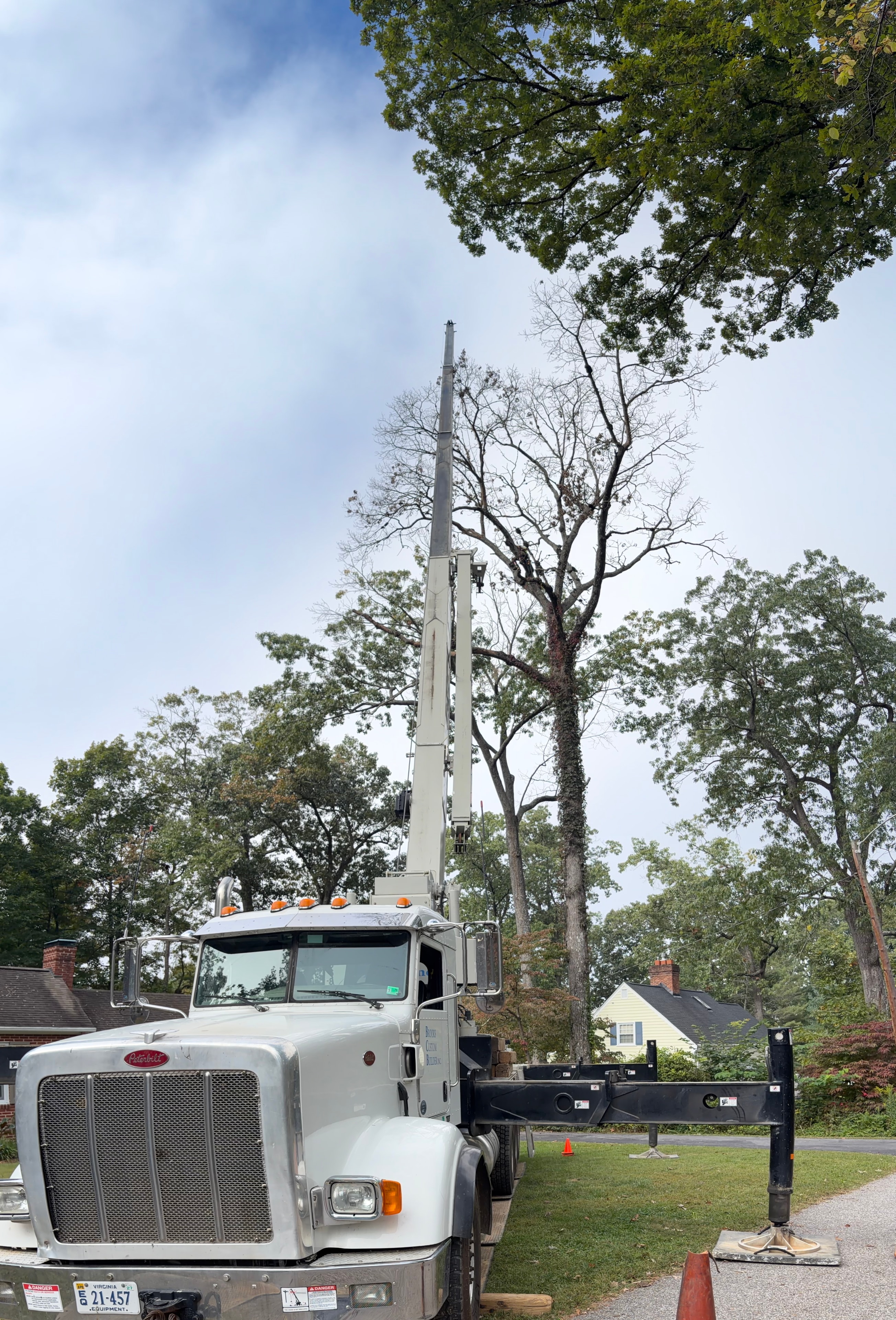
Sometimes removal is the right answer — particularly for high-risk species in close proximity to a foundation, or when a tree is already causing documented damage. This is a significant decision for a mature tree, and we always try to explore alternatives first.
If removal is necessary, we handle the full process including stump grinding. Stump grinding removes the stump and the upper root crown, but existing roots remain underground and decay naturally over time.
Replacement Planting
If you do remove a tree, consider replacing it with a lower-risk species planted at an appropriate distance. A well-chosen tree in the right location provides all the benefits — shade, beauty, property value — without the foundation risk.
The Bottom Line
Most trees near foundations are not causing damage and never will. The risk is real but often overstated, and it depends heavily on species, soil type, distance, and the condition of your foundation.
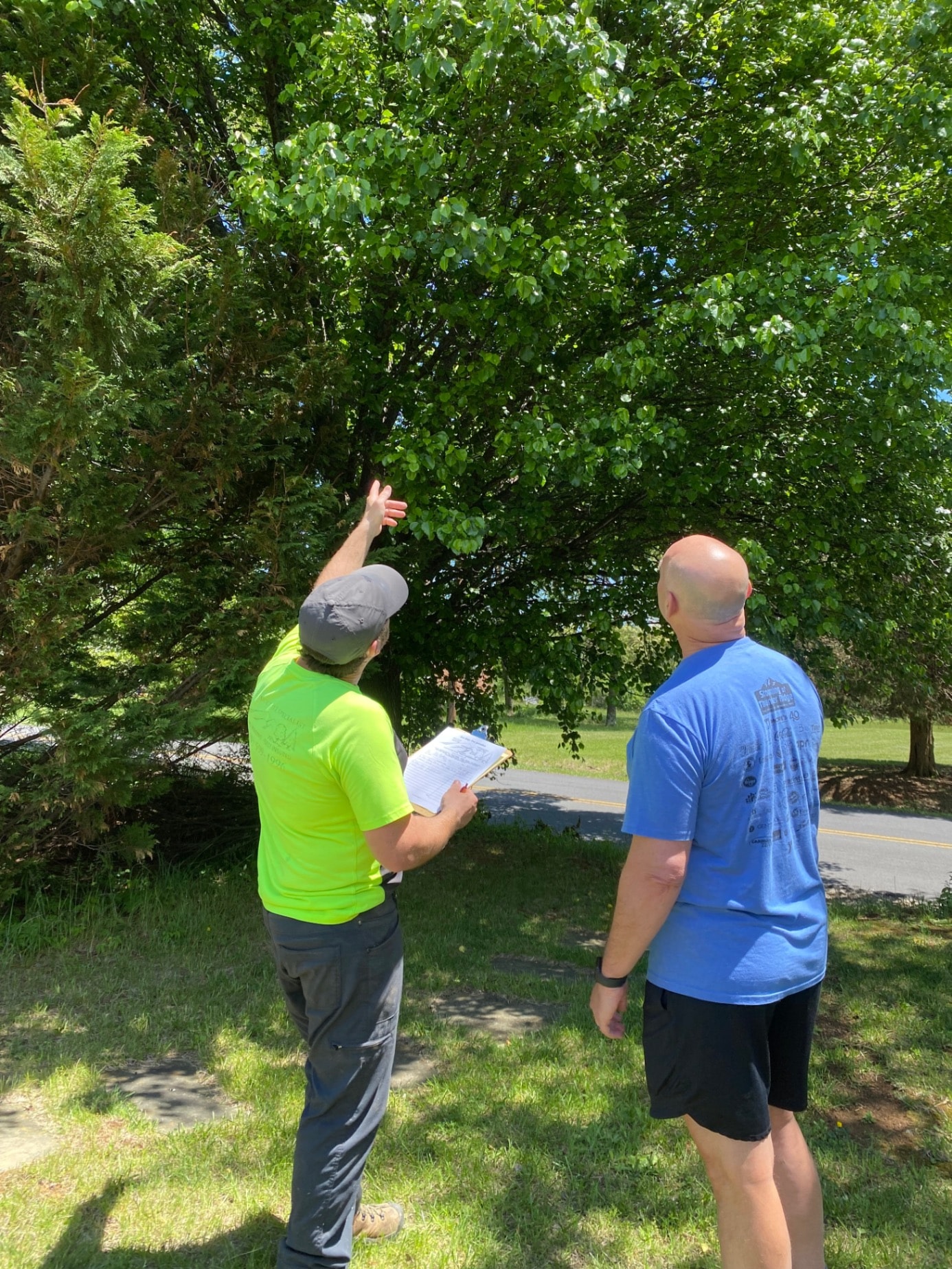
If you're concerned about a tree near your home, the best first step is a professional assessment — not removal. An ISA-certified arborist can evaluate the tree, its root system, and the specific risk factors on your property and give you an honest recommendation.
Blue Ridge Tree Specialists serves Blacksburg, Christiansburg, Radford, Salem, and the surrounding New River Valley. If you have a tree near your foundation and want a straight answer about the risk, call (540) 951-1458 for a free consultation.
Explore Topics
Written by
Blue Ridge Tree Specialists
Written by the Blue Ridge Tree Specialists team, drawing on more than four decades of local tree-care experience in the New River Valley.