How to Tell If a Tree Is Dead or Dying
Learn the warning signs of a dead or dying tree before it becomes a hazard on your New River Valley property. A quick guide from ISA-certified arborists.
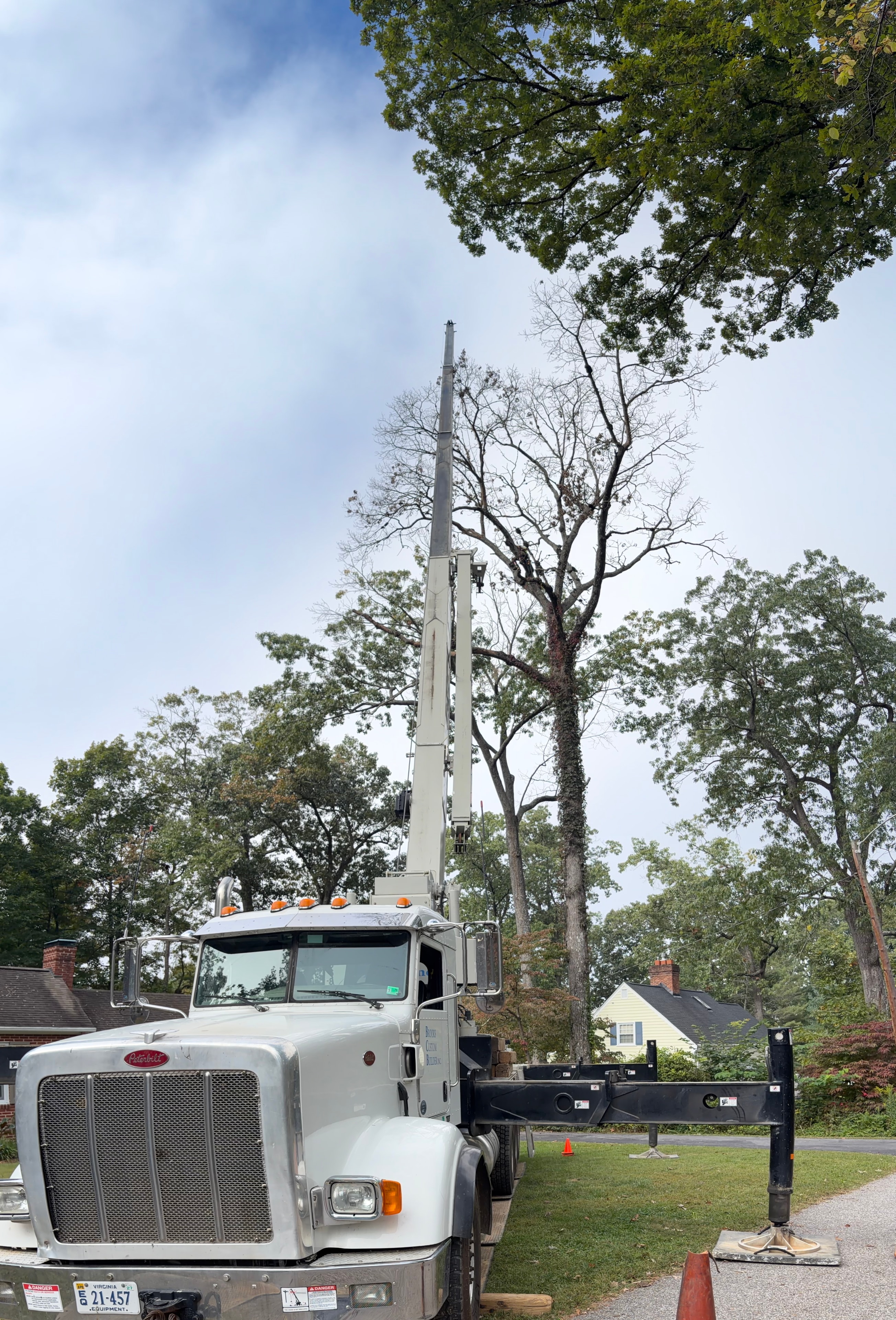
A dead or dying tree doesn't always look dramatic. Sometimes it's a slow decline — a few bare branches here, some peeling bark there — until one day a storm brings the whole thing down on your fence, your car, or worse.
Knowing what to look for — before a tree fails — is one of the most practical things a homeowner can do. Here's how to read the signs.
The Scratch Test: Your First Step
The easiest way to check if a branch is alive is the scratch test. Use your fingernail or a pocket knife to scratch a small patch of bark on a branch. If the layer underneath is:
- Green or white — the branch is alive
- Brown and dry — that branch is dead
Work your way from smaller branches toward the trunk. If multiple areas of the trunk fail the scratch test, it's a strong indicator the tree is in serious decline — but a scratch test is a preliminary check, not a definitive diagnosis. A professional assessment is the only way to know for certain.
7 Signs Your Tree May Be Dead or Dying
1. No Leaves in Growing Season
If it's spring or summer and your tree has no leaves — or only leaves on a few branches — that's a serious red flag. Some trees leaf out later than others, but by late May in Blacksburg, a healthy deciduous tree should be fully leafed out.
2. Brittle, Easily Snapping Branches
Healthy branches bend before they break. Dead branches snap cleanly with little force. If you can break small branches off by hand with a dry snap, the tree is losing vitality.
3. Bark That's Falling Off
Some bark shedding is normal for certain species. But large sections of bark falling away — especially when the wood underneath looks gray, dry, or discolored — is a sign of serious decline.
4. Fungal Growth at the Base
Mushrooms or shelf fungi growing at the base of a tree or on the trunk are a warning sign worth taking seriously. Fungal growth can indicate internal decay, though the type, location, and extent of any decay matters — not all fungal growth means the tree is structurally compromised. A certified arborist can assess how significant the decay is and whether it affects the tree's stability.
5. Cracks or Cavities in the Trunk
Deep vertical cracks or hollow cavities in the trunk indicate structural weakness. A tree can look healthy from the outside while being hollow inside. The extent and location of the hollow, the amount of remaining sound wood, the species, and other factors all affect whether the tree remains structurally sound — which is why a professional evaluation matters.
6. Leaning That Wasn't There Before
Trees lean for many reasons, but a sudden or progressive lean — especially after a storm or wet period — can indicate root failure. If the soil around the base is heaving or cracking, the roots may no longer be anchoring the tree safely.
7. Dead Wood at the Crown
When the top of the tree (the crown) starts dying back while the lower branches still have leaves, it's called "crown dieback." It's often one of the first visible signs that a tree is in serious decline.
Dead Tree vs. Dormant Tree: How to Tell the Difference
In winter, it can be hard to tell a dead tree from a dormant one. Here's what to look for:
- Dormant trees have buds on their branches — small, firm, and often slightly sticky
- Dead trees have no buds, or buds that are dry and shriveled
- Dormant trees pass the scratch test (green underneath)
- Dead trees fail the scratch test (brown and dry throughout)
If you're unsure, wait until late April or early May. If the tree still hasn't leafed out by then, it's time to call a professional.
When a Dead Tree Becomes a Hazard
Not every dead tree needs to come down immediately. A dead tree in an open field away from structures may be fine to leave for wildlife habitat. But a dead tree near your home, driveway, power lines, or anywhere people walk or gather is a different story.
Dead trees are unpredictable. They can fall without warning — even on calm days — because the wood becomes brittle and the root system deteriorates. In the New River Valley, where we get ice storms, high winds, and heavy snow, a dead tree near your home is a liability.
What to Do If You Suspect a Dead Tree
- Stay clear of severely leaning trees or hanging limbs. Do not approach, work under, or attempt to remove a tree that is actively leaning or has large hanging branches. These are immediate hazards — keep people and pets away and call a professional.
- Don't wait for a storm to make the decision for you. A proactive removal is often safer and less costly than emergency cleanup — though a professional assessment may recommend monitoring or treatment rather than removal.
- Get a professional assessment. Our ISA & TCIA certified arborists can evaluate the tree and give you an honest recommendation — removal, cabling, or monitoring.
- Check your property insurance. Coverage for tree damage varies by policy. Some insurers consider whether a homeowner was aware of a hazardous tree and took no action. Review your policy or speak with your agent to understand your coverage.
Free Estimates for New River Valley Homeowners
If you've spotted any of these warning signs, we're glad to take a look. Blue Ridge Tree Specialists has been working in Blacksburg, Christiansburg, Radford, and the surrounding New River Valley since 1980 — we know the trees here, the weather patterns, and what failure looks like before it happens.
Call (540) 951-1458 or use the contact form on our website to schedule a free assessment.
Explore Topics
Written by
Blue Ridge Tree Specialists
Written by the Blue Ridge Tree Specialists team, drawing on more than four decades of local tree-care experience in the New River Valley.